The Royals is a duology by Rachel Hawkins. The first book, Prince Charming, was originally published under the title 'Royals.' Daisy Winters is a Floridian teen whose sister just happens to be marrying the Heir to the Throne of Scotland, Prince Alexander. However, most of that family is a mess, as she finds outs when she visits for the summer. Millie Quint loves Scotland, so when the opportunity to study over there comes up, she takes it.
I thought it was an interesting take on a Royalty book, having the main characters sister be the one marrying the Prince, and Daisy along for the ride. Credit to the second book, too, because surely, everyone deserves to read a royalty romance where they feel represented.
Daisy's a geek, but as it isn't the main focus of the book, it's not constantly discussed. This is certainly realistic - there are scenarios where I would be discussing my geeky hobbies all the time, and there are times when it just doesn't come up all that much. She's also not got one specific interest, which is perfectly valid for someone her age.
Millie has a passion, and it's different, too! She really likes Geology. I really like YA characters with an interest, especially when it's one outside the norm. However, for someone Scotland-obsessed, Millie really didn't seem to know all that much about it. Wouldn't you, I don't know, at least look at a map? She also assumes that Brits wouldn't understand what she means by Texas, or some of the American slang she uses. Princess Flora gets some of her best lines just pointing this out to Millie.
There are quite a lot of just basic cultural errors here and there. Some could be excused by the narrators being two American girls, but... Daisy's parents are both British and Millie's (allegedly) Scotland-obsessed, so wouldn't they be expected to know more about the countries then the average non-Brit? And also... Daisy's parentage would give both her and Eleanor automatic British citizenship, but never once is this brought up. Hawkins seems to hugely misunderstand how much regular people really care about the royal family, too.
It could have been a great place to inform people slightly about Scottish culture, but all that is brought up is what people would already know. Things like bagpipes and tartan (which isn't as interchangeable from plaid as Hawkins seems to think) and oddly, Pimm's. Pimm's is English, and I was unsure from the description if Hawkins had ever tried one, since they are made with lemonade and not really that strong. Scottish cuisine is almost never mentioned. Shortbread or cranachan are lovely sweet offerings, and it would have been interesting to see haggis presented as something not to be feared. The only time is when Millie turned her nose up at Scottish breakfast, which was annoying as fry-up is the food of the gods. The only thing that would seem strange to an American is black pudding, and this was served hotel-buffet-style in a palace, so I would assume it would be good and Millie can just leave what she doesn't like.
There's no point, at all, where a British person ever would have a medical bill, for a serious medical condition. That's it, end of sentence. The only points where we pay is, in some circumstances, for dentistry and opticians, and for non-essential procedures.
Another thing I found really hard to swallow is the whole school thing. Look, the UK education system... is not the easiest one to step into for outsiders. We're discouraged from changing schools to a different one in the same country during our GCSE or A-level years. What qualification was this school even offering? A-levels? Highers? International Baccalaureate? Advanced Highers probably would make most sense, but what all those have in common is that they are two-year courses. You don't just study one thing for one year and that's it done. Everything we learn builds on what comes before, and I would expect Millie to need some serious catch-up courses. She'd be trying to do two years of work in one, plus catch up on the building blocks that we've been learning since primary school. Our history in schools is majority British, and that's a lot to learn the year before applying to university or college. Stepping into a British school just for your last year of compulsory education is very difficult.
And... can we please stop describing brown hair as boring? Look, I have brown hair, and reading that description so often does get me down. What about "My hair is the rich brown you see sometimes on dye commercials, and it shines perfectly in the sunlight."
By and large, though, the slang on the UK characters works. What a lot of people don't realise is that we are exposed to American media since birth. So yes, you can get away with more Americanisms than people think, and most times, we can 'translate' between the two on the fly, or at least work things out from the context.
One thing these Royalty books (as a genre, not just this series) do well is show the pressures of royalty in modern times with the extent of the media. Meghan Markle hasn't been treated well in the UK press, and roughly 0% of what they publish about the Royal Family can be believed. It almost makes me long for a time when the royals were off-limits. The first book, actually, showed this better than the second. I would have expected what was essentially Princess Flora coming out in front of the world to be all over the tabloids and her mother to be furious, but the book does not tie up this loose end.
I don't want to seem like I'm being too harsh on these books. Royalty books are my guilty pleasure, and it's obviously not meant to be serious. I just feel like a lot of the issues in this book could have been ironed out with even one read-through by a British person. Take them with grains of salt, and don't go running to your British friend saying "Is it true you don't have peanut butter because I read so in this book?"
In case it wasn't clear - yes, we have peanut butter, and not just in the American Foods aisle of the supermarket.
If you want another fun, frivolous take on a fictional royal family, but one that does pay slightly more attention to the worldbuilding, check out American Royals by Katherine McGee.
Further reading on the UK School System:
https://www.goodschoolsguide.co.uk/international/transitions/from-american-schools-to-british
http://www.lumoseducation.com/2018/09/20/moving-american-british-education-system-points-consider/
Showing posts with label books. Show all posts
Friday, 24 January 2020
Monday, 30 December 2019
My Media Picks of the Decade!
I was finding it tricky to come up with a list of anything 'Of The Decade.' Part of the problem was that I can't remember what I was doing last year, let alone ten years ago. I also would keep choosing things that came out at the very tail end of the last decade. Eventually, I decided to narrow it down to one pick for each category I would focus on, so I could choose what stood out most strongly in my memory. I also said that if something came out the previous decade, but has had lasting cultural impacts into this decade, I would count it. It would also have to be something I enjoyed personally myself, so that I could form some coherent thoughts on it. And so, without further ado:
Video Games: Right off the bat, this was a tricky category. I could make a reasonable argument for anything from Minecraft to Pokémon Go. However, considering I was going for things I personally enjoyed, I ended up giving it to Dragon Age and Mass Effect. Video games are also effecting how we tell stories in more traditional media. BioWare has been at the helm of choice-based narratives in video games since very much the early part of the last decade. Indeed, the first Dragon Age game came out in the 2009, and Mass Effect came out in 2007. I won't say there weren't a few missteps within these series, but that's part of how things grow. They've also very much pioneered romance sidequests, a mechanic in video games which I enjoy. Choice-based dialogue is showing up more commonly, even in games now where you wouldn't expect it, and I can only hope that companies continue to come up with ways to make players feel involved with the story.
Books: This is the one place where I really feel like I have cheated slightly. I have chosen The Hunger Games, with only Mockingjay coming out in this decade. However, the first film came out in 2012, so you can easily make the argument that the bulk of their popularity came out this year. And their huge effect on Young Adult literature has definitely been felt this decade. YA is having a bit of a renaissance right now, and many titles taken on would have been done in part due to the influence of this series. I will also credit it with a wider resurgence of dystopian fiction, which is at it's best a way to view the issues facing our world with a different lens.
Films: I hope everyone will understand if I choose the Marvel movies as a whole. This decade in film will be very much remembered as the decade of superhero movies. They're all a fun way to spend 2-and-a-bit hours, even the ones with lower critical ratings. In fact, if all they provided was an escape from reality, that would be enough reason to keep making them. But they also encourage me to be a better person. We can't all be superheroes, but we can all do a little kindness. I really hope that in the next decade, they continue to push the boundaries of what kind of stories they can tell.
TV Show: Did any entertainment from any media define the decade so greatly as Game of Thrones? It has monopolised conversations with workmates and friends ever since it first appeared on screens. It has changed what we can expect from TV shows in terms of production values. It's become the show all other shows will be compared to. In terms of special effects, number of characters, costuming, scope and scale of the sets, there wasn't anything like it before, and I don't think there will be for quite some time.
Musical: Yeah, this had to go to Hamilton. Hamilton has pushed boundaries in so many ways. It influences how musical songs can sound. It allowed people to challenge their preconceptions of who can tell stories from history. It has encouraged an interest in musicals with those who may not have experienced them much. It has made the history of the Founding Fathers more relevant to those who may have found it a dry topic at school, or would have had no cause to study it previously. It has given much new life to a form of media that was struggling to find it's place in this decade.
Video Games: Right off the bat, this was a tricky category. I could make a reasonable argument for anything from Minecraft to Pokémon Go. However, considering I was going for things I personally enjoyed, I ended up giving it to Dragon Age and Mass Effect. Video games are also effecting how we tell stories in more traditional media. BioWare has been at the helm of choice-based narratives in video games since very much the early part of the last decade. Indeed, the first Dragon Age game came out in the 2009, and Mass Effect came out in 2007. I won't say there weren't a few missteps within these series, but that's part of how things grow. They've also very much pioneered romance sidequests, a mechanic in video games which I enjoy. Choice-based dialogue is showing up more commonly, even in games now where you wouldn't expect it, and I can only hope that companies continue to come up with ways to make players feel involved with the story.
Books: This is the one place where I really feel like I have cheated slightly. I have chosen The Hunger Games, with only Mockingjay coming out in this decade. However, the first film came out in 2012, so you can easily make the argument that the bulk of their popularity came out this year. And their huge effect on Young Adult literature has definitely been felt this decade. YA is having a bit of a renaissance right now, and many titles taken on would have been done in part due to the influence of this series. I will also credit it with a wider resurgence of dystopian fiction, which is at it's best a way to view the issues facing our world with a different lens.
Films: I hope everyone will understand if I choose the Marvel movies as a whole. This decade in film will be very much remembered as the decade of superhero movies. They're all a fun way to spend 2-and-a-bit hours, even the ones with lower critical ratings. In fact, if all they provided was an escape from reality, that would be enough reason to keep making them. But they also encourage me to be a better person. We can't all be superheroes, but we can all do a little kindness. I really hope that in the next decade, they continue to push the boundaries of what kind of stories they can tell.
TV Show: Did any entertainment from any media define the decade so greatly as Game of Thrones? It has monopolised conversations with workmates and friends ever since it first appeared on screens. It has changed what we can expect from TV shows in terms of production values. It's become the show all other shows will be compared to. In terms of special effects, number of characters, costuming, scope and scale of the sets, there wasn't anything like it before, and I don't think there will be for quite some time.
Musical: Yeah, this had to go to Hamilton. Hamilton has pushed boundaries in so many ways. It influences how musical songs can sound. It allowed people to challenge their preconceptions of who can tell stories from history. It has encouraged an interest in musicals with those who may not have experienced them much. It has made the history of the Founding Fathers more relevant to those who may have found it a dry topic at school, or would have had no cause to study it previously. It has given much new life to a form of media that was struggling to find it's place in this decade.
Friday, 7 June 2019
A Review of the Out Of The Hitler Time Series
Out of the Hitler Time is a series by Judith Kerr, semi-autobiographically based on her own life as a Jewish refugee from Germany and coming to Britain. The three books are When Hitler Stole Pink Rabbit, Bombs on Aunt Dainty and A Small Person Far Away. Anna's Jewish father has been writing anti-Nazi articles before Hitler came to power, and along with Anna's mother and her brother Max, they have to flee the country in 1933. The first book accounts their journey to Switzerland and France before taking up residence in Britain. Bombs on Aunt Dainty looks at the effects of the Blitz in London and the issues faced by the refugees from Europe. A Small Person Far Away has Anna return to Germany, now divided into sections after the war.
These books are the best books I've read about the Second World War. The first book especially can be enjoyed by children and adults alike. These are the books I needed as a child, learning about the Blitz and evacuees. Children have a different perception of time, and history can feel like events that took place a long time ago to people you don't know at that age, and historical fiction demolishes that barrier.
They also have a different perspective on Nazi Germany from that which is normally seen. Anna and her family fled in 1933. That is very early in terms of Hitler's power, before the Second World War even started, towards the end of the decade. As such, you see the fear and uncertainty hanging over them but also optimism at the beginning, as they think they'll be back home in six months.
When Hitler Stole Pink Rabbit is a great introduction to the horrors of Nazi Germany, and while the horrors of the Holocaust aren't discussed in detail, they aren't glossed over, either. The book has a remarkably light-hearted touch to it's subject matter, though. Much of this comes from the family's closeness, keeping each others spirits up. Happy-go-lucky Anna sees most of their travels as an adventure, like her hopelessly impractical father. But the difficulties of going from being an upper-middle class German family to penniless refugees are a driving force of the book, with Anna's mother being the one most often bearing the brunt of it.
Bombs on Aunt Dainty is most definitely more YA, focusing much more on Anna's personal relationships. She's at loggerheads with her parents more often than not. This book also deals with her relationship with a much older man. Sex is discussed. She's a teenager in this one, and it shows. She starts to get more in touch with her passion for drawing, while working to help her family. Many of the refugees from Europe in Britain at the time did not find it easy, with many of the public viewing them as the enemy. This book may not be suitable for children to read straight after reading When Hitler Stole Pink Rabbit, but that can depend on the individual.
A Small Person Far Away feels older still. Anna is an adult, visiting her mother in hospital in Berlin. Discussions on the ethics of assisted suicide even without an underlying medical issue are frequent in the book, and it has an air of nostalgia and longing for home that adults in particular will identify with. It hasn't quite got the tension of the first two that is inherent with being set during the war and is more of a quiet family story. It's also a vital look at how depression and suicide was misunderstood back then. Anna's mother's illness (explicitly named as depression in the narrative) wasn't caught or treated in the same way it might be now.
The question of ethical treatment of refugees is perhaps more relevant now than it has been at any point in the last 70 years. These books need to be pressed into the hands of everyone you know.
These books are the best books I've read about the Second World War. The first book especially can be enjoyed by children and adults alike. These are the books I needed as a child, learning about the Blitz and evacuees. Children have a different perception of time, and history can feel like events that took place a long time ago to people you don't know at that age, and historical fiction demolishes that barrier.
They also have a different perspective on Nazi Germany from that which is normally seen. Anna and her family fled in 1933. That is very early in terms of Hitler's power, before the Second World War even started, towards the end of the decade. As such, you see the fear and uncertainty hanging over them but also optimism at the beginning, as they think they'll be back home in six months.
When Hitler Stole Pink Rabbit is a great introduction to the horrors of Nazi Germany, and while the horrors of the Holocaust aren't discussed in detail, they aren't glossed over, either. The book has a remarkably light-hearted touch to it's subject matter, though. Much of this comes from the family's closeness, keeping each others spirits up. Happy-go-lucky Anna sees most of their travels as an adventure, like her hopelessly impractical father. But the difficulties of going from being an upper-middle class German family to penniless refugees are a driving force of the book, with Anna's mother being the one most often bearing the brunt of it.
Bombs on Aunt Dainty is most definitely more YA, focusing much more on Anna's personal relationships. She's at loggerheads with her parents more often than not. This book also deals with her relationship with a much older man. Sex is discussed. She's a teenager in this one, and it shows. She starts to get more in touch with her passion for drawing, while working to help her family. Many of the refugees from Europe in Britain at the time did not find it easy, with many of the public viewing them as the enemy. This book may not be suitable for children to read straight after reading When Hitler Stole Pink Rabbit, but that can depend on the individual.
A Small Person Far Away feels older still. Anna is an adult, visiting her mother in hospital in Berlin. Discussions on the ethics of assisted suicide even without an underlying medical issue are frequent in the book, and it has an air of nostalgia and longing for home that adults in particular will identify with. It hasn't quite got the tension of the first two that is inherent with being set during the war and is more of a quiet family story. It's also a vital look at how depression and suicide was misunderstood back then. Anna's mother's illness (explicitly named as depression in the narrative) wasn't caught or treated in the same way it might be now.
The question of ethical treatment of refugees is perhaps more relevant now than it has been at any point in the last 70 years. These books need to be pressed into the hands of everyone you know.
Thursday, 11 April 2019
A Review of The Princess and the Fangirl
The Princess and the Fangirl is a book by Ashley Poston, and the sort-of companion/sequel novel to Geekerella. Imogen Lovelace is a fan of Starfield, and campaigning hard to save her favourite character, Amara. Jessica Stone, the actress playing Amara, is just hoping she can put the blockbuster sci-fi flick behind her. As luck would have it, they sort of look like each other, and a chance meeting and a case of mistaken identity later leaves Imogen and Jessica swapping lives for the duration of ExcelsiCon.
I've never made any secrets about how much I love Geekerella, have I? However, if Geekerella was Poston testing the waters, this one is her cramming as much nerd culture in as she can, and it is glorious. One of the big reasons this works is because Poston knows her stuff, and her references are both varied and rather obscure, at times. I love seeing my favourite fictional things represented that normally never get mentioned in popular culture!
I'm starting to call this series my comfort read, like you get comfort foods. Seriously, it feels like friends. And I mean literally, I have a group of nerd friends who will debate sci-fi shows and quote memes at each other. Semi-ironically. This book feels like them.
Imogen and Jessica are two very different girls, which lets Poston get in two opinions and sides of the story. Imogen's experience with fandoms and conventions is very different from Jessica's experience with them. Imogen grew up in conventions but Jessica has only ever seen them as a work obligation that she dislikes. Imogen is impulsive, and Jessica can be aloof, coming across as mean. But they are both sympathetic individuals (the joys of a duel POV!) and with a great supporting cast around them. I would have sold my soul for more time with Imogen's family.
Poston doesn't shy away from representing the worst aspects of fan culture, too. If I could take one message away from both these books, it would be "love your nerdy fandoms with your whole heart, but be respectful about them." The big one that sticks out here is Jasper. He sticks out as an asshole from the first time we see him with Imogen, but he cements it when he meet-and-greets with Imogen-as-Jess. But it's also obvious that many of Jessica's cast and crew, the director especially, have little respect for her. Arranging a publicity stunt when it's her turn to speak is trash behaviour.
Vance Reigns is also asshole extraordinaire, cutting off Imogen opening up to him to tell her she is pretty, then proceeds to repeat synonyms for pretty during the rest of the conversation, since that's the only thing that he can ever imagine girls being, and the only part of her speech that he paid any attention to. However, Imogen is still on the naïve side, and doesn't notice the inherent condescension in how he brings it up, just her happiness about being called pretty. This is a realistic response for her situation, as girls are taught that being attractive to men is the most important thing they can be.
"Are you one of those girls who think girls who wear make-up are vapid?"
Yes. "No."
I'd like to talk about this response, from Imogen. And again, it is realistic! There are teenage girls who feel this way, I was one! To be fair, it was hugely hypocritical in my case, too, because it wasn't like I didn't wear some on occasion. And it is an attitude that needs calling out. Jessica points out that she wears her make-up as armour, and a lot of other women in the book are described as wearing it.
Elle's cameos were good to have. She's basically my literary best friend, so it was nice to see her. But there are a lot of cameos from other characters from Geekerella, and they did feel slightly gratuitous. This novel could have been a vaguely related standalone, but I would honestly have to say that you'll get more out of this one if you read Geekerella first, especially as this book spoils the first one slightly. To the extent that you can spoil a Cinderella retelling, anyway.
And, uh... didn't the first book confirm that Elle's father started ExcelsiCon when she was, like, 7? So how is this the 25th annual ExcelsiCon? Minor, but it bothered me. (Also, I picked Geekerella up to check this fact, and happened to spot that the Amara's original actress in that book was called Ellen North, not Natalia Ford. I'm sorry! I know this is such a picky complaint.) (And in looking it up, I did realise that my original memory was wrong, and the ExcelsiCon when Elle was 7 was just the first one she could remember. Maybe I just need to reread Geekerella!
Recommended for everyone who loves fandom and nerdy things. And please, give me a short story where Harper introduces Jessica to the original Starfield series.
I've never made any secrets about how much I love Geekerella, have I? However, if Geekerella was Poston testing the waters, this one is her cramming as much nerd culture in as she can, and it is glorious. One of the big reasons this works is because Poston knows her stuff, and her references are both varied and rather obscure, at times. I love seeing my favourite fictional things represented that normally never get mentioned in popular culture!
I'm starting to call this series my comfort read, like you get comfort foods. Seriously, it feels like friends. And I mean literally, I have a group of nerd friends who will debate sci-fi shows and quote memes at each other. Semi-ironically. This book feels like them.
Imogen and Jessica are two very different girls, which lets Poston get in two opinions and sides of the story. Imogen's experience with fandoms and conventions is very different from Jessica's experience with them. Imogen grew up in conventions but Jessica has only ever seen them as a work obligation that she dislikes. Imogen is impulsive, and Jessica can be aloof, coming across as mean. But they are both sympathetic individuals (the joys of a duel POV!) and with a great supporting cast around them. I would have sold my soul for more time with Imogen's family.
Poston doesn't shy away from representing the worst aspects of fan culture, too. If I could take one message away from both these books, it would be "love your nerdy fandoms with your whole heart, but be respectful about them." The big one that sticks out here is Jasper. He sticks out as an asshole from the first time we see him with Imogen, but he cements it when he meet-and-greets with Imogen-as-Jess. But it's also obvious that many of Jessica's cast and crew, the director especially, have little respect for her. Arranging a publicity stunt when it's her turn to speak is trash behaviour.
Vance Reigns is also asshole extraordinaire, cutting off Imogen opening up to him to tell her she is pretty, then proceeds to repeat synonyms for pretty during the rest of the conversation, since that's the only thing that he can ever imagine girls being, and the only part of her speech that he paid any attention to. However, Imogen is still on the naïve side, and doesn't notice the inherent condescension in how he brings it up, just her happiness about being called pretty. This is a realistic response for her situation, as girls are taught that being attractive to men is the most important thing they can be.
"Are you one of those girls who think girls who wear make-up are vapid?"
Yes. "No."
I'd like to talk about this response, from Imogen. And again, it is realistic! There are teenage girls who feel this way, I was one! To be fair, it was hugely hypocritical in my case, too, because it wasn't like I didn't wear some on occasion. And it is an attitude that needs calling out. Jessica points out that she wears her make-up as armour, and a lot of other women in the book are described as wearing it.
Elle's cameos were good to have. She's basically my literary best friend, so it was nice to see her. But there are a lot of cameos from other characters from Geekerella, and they did feel slightly gratuitous. This novel could have been a vaguely related standalone, but I would honestly have to say that you'll get more out of this one if you read Geekerella first, especially as this book spoils the first one slightly. To the extent that you can spoil a Cinderella retelling, anyway.
And, uh... didn't the first book confirm that Elle's father started ExcelsiCon when she was, like, 7? So how is this the 25th annual ExcelsiCon? Minor, but it bothered me. (Also, I picked Geekerella up to check this fact, and happened to spot that the Amara's original actress in that book was called Ellen North, not Natalia Ford. I'm sorry! I know this is such a picky complaint.) (And in looking it up, I did realise that my original memory was wrong, and the ExcelsiCon when Elle was 7 was just the first one she could remember. Maybe I just need to reread Geekerella!
Recommended for everyone who loves fandom and nerdy things. And please, give me a short story where Harper introduces Jessica to the original Starfield series.
Saturday, 23 March 2019
A Little Bit of Love for The Babysitter's Club
These book series, with many volumes, probably did more for literacy than people give them credit for. Getting teenagers to read and keep reading is a common topic, but these volumes were one in which teenagers could pick up voluntarily and read for themselves. My series of choice for this was The Babysitter's Club, facilitated by easy access to a large rotating shelf of them in my local library. I begged Mum if we could go into other libraries, just so I could see if they had any ones I hadn't read. I do remember reading at least one Sweet Valley book, and loving Nancy Drew when I could get my hands on them.
The Babysitter's Club showed a group of distinct, different girls being close friends, leaving aside a few books showing the sort of arguments you would expect from early-teens. Plus, they also ran a business requiring a huge amount of responsibility, and I'd be lying if I said I didn't think these had some influence on my work ethic now. Put aside whether this is realistic for 13-year-olds, and see them more as role models.
Each of the girls were so different that you could distinguish between them in writing. A Claudia book sounded nothing like a Dawn book sounded nothing like a Mary-Anne book. My favourite, the character I reached for primarily, was Stacey. I loved the descriptions of her clothes, and I also loved how they showed someone can be both fashion conscious and smart. I can also credit these books with teaching me that diabetes wasn't just "something fat people have."
Another big thing this series showed was different types of families. From divorces, remarriages and one of the earliest good portrayals of step-families that I can remember, all were represented. This was true for the Babysitters, and their charges, too. It also had it's fair share of issue books, some of them dealing with family issues like these.
The diversity in these books can be considered tokenist, but I wouldn't like to comment on it, personally. I have read comments from Asian-Americans who really identified with Claudia as a Japanese-American who wasn't a nerdy stereotype, and I wouldn't like to invalidate anyone's experiences there. I will say that it was more so than other series within the same time period, but 'better than the rest' doesn't necessarily mean good.
If you haven't read them for a while, pick up a few and spend a nice afternoon getting reacquainted with old friends. Most libraries still have several copies! If you have someone in your family at just the right age, why not introduce her?
The Babysitter's Club showed a group of distinct, different girls being close friends, leaving aside a few books showing the sort of arguments you would expect from early-teens. Plus, they also ran a business requiring a huge amount of responsibility, and I'd be lying if I said I didn't think these had some influence on my work ethic now. Put aside whether this is realistic for 13-year-olds, and see them more as role models.
Each of the girls were so different that you could distinguish between them in writing. A Claudia book sounded nothing like a Dawn book sounded nothing like a Mary-Anne book. My favourite, the character I reached for primarily, was Stacey. I loved the descriptions of her clothes, and I also loved how they showed someone can be both fashion conscious and smart. I can also credit these books with teaching me that diabetes wasn't just "something fat people have."
Another big thing this series showed was different types of families. From divorces, remarriages and one of the earliest good portrayals of step-families that I can remember, all were represented. This was true for the Babysitters, and their charges, too. It also had it's fair share of issue books, some of them dealing with family issues like these.
The diversity in these books can be considered tokenist, but I wouldn't like to comment on it, personally. I have read comments from Asian-Americans who really identified with Claudia as a Japanese-American who wasn't a nerdy stereotype, and I wouldn't like to invalidate anyone's experiences there. I will say that it was more so than other series within the same time period, but 'better than the rest' doesn't necessarily mean good.
If you haven't read them for a while, pick up a few and spend a nice afternoon getting reacquainted with old friends. Most libraries still have several copies! If you have someone in your family at just the right age, why not introduce her?
Tuesday, 26 February 2019
A Review of the Firebird Trilogy
The Firebird Trilogy is a series by Claudia Grey, containing A Thousand Pieces of You, Ten Thousand Skies Above You and A Million Worlds with You. Marguerite Caine is the daughter of two genius scientists who have come up with the most important invention of recent times. The Firebird, a device which allows people to jump into other dimensions, will revolutionise the world. But when Paul Markov, her parents' protegee, kills her father and runs off with the information, Marguerite gives chase with him into other universes, her parents' other student Theo Beck at her side. But she quickly learns that everything was not as it seems...
This trilogy had no right to be as enjoyable as it was. I loved that much of the plot revolves around Marguerite being the one to save her 6 foot 2, genius boyfriend. And I loved her parents being good parents (in most universes) and the fact that it was her father who gave up his career to support her genius mother. And her sister Josie is an thrill-seeking adrenaline junkie with a science brain, and I'm sad that we didn't see more of her, and I would have loved to spend more time with her Russian brothers and sister too.
Grey rather quickly sets her limits on what her technology can do - the need for reminders and the need to have a version of yourself in the universe where you are going too. It's body-swapping alternate dimensions, so worlds where Marguerite has never been born or has died young can't be visited by her.
So it's sci-fi, but seems to take place in a universe not far off our own - many of the brands are the same as ours, for instance. This does work, because I've never seen why our brands would be completely forgotten about in the future - with how the world is, I feel that some will survive. But this world is also not quite ours - instead of iPhones, they have tPhones. Marguerite's time line is pretty much an alternate version of our exact world, but our world is one of her alternate dimensions, too.
Another thing that I don't seem to find as much in sci-fi is characters having passions. Here, Marguerite, and most of her alternate universe selves, are artists. She's looking into going to college for art restoration, but would love to study fine art and make a living drawing portraits. And it's such as small detail to see characters in sci-fi having the same concerns we would, but of course they would. This may just be in comparison with the rest of the characters, but Marguerite's not the most book-smart character, (and say it with me - not everyone in books has to be) although she does read and uses books to quickly get her bearings in her new universes. She's intuitive, though, good at picking up on small clues from other characters about who they are to her alternative universe self and how to interact with them. This may come from her artist background, observing people in order to paint them. And apart from a few little places where her personality is described, this is mostly shown to us rather than told.
I found I read the first book super quick, but the second one dragged in the middle - there's more romance and love-triangle stuff in that one, and less of the Russiaverse, which I loved. But then the second book throws so many twists and turns at you in the ending. The third book, however, pulls out all the stops, with some real gems of a scene. The Conclave of the Marguerites will go down in my mind as one of the most amusing scenes in any work of fiction ever.
I will put in a love triangle warning, however I felt like there was never any question of Marguerite's feelings towards Paul, and Theo is an interesting way to show how you can love someone without them loving you. I do wish he'd dropped his friendzoned attitude, though. If you truly love someone, you never try and make them feel guilty about not loving someone else. I felt like maybe the series would still have worked if her partner had just been her best friend, platonic male or female.
And we've finally got an American author who did her research - Marguerite winds up in Cambridge, and everything from the Bridge of Sighs to Marguerite riding a bike was familiar. Grey even bought up British brand names, such as Boots. It's almost enough for me to forgive Marguerite laughing at the funny accent in the first book.
I would give up my soul for a book like this which doesn't just handwave the language issue, however. Language acquisition is subject to much debate about the innateness of it, and there's no reason surely why Marguerite should be able to speak Russian just because a version of her can when inhabiting that body. This also features in the third book, where a version of Marguerite is deaf, likely from a bout of meningitis as a child, and our Marguerite innately knows sign language while in that body.
Highly recommended for those after a fun, enjoyable, quick book in the combined sci-fi/romance genre.
This trilogy had no right to be as enjoyable as it was. I loved that much of the plot revolves around Marguerite being the one to save her 6 foot 2, genius boyfriend. And I loved her parents being good parents (in most universes) and the fact that it was her father who gave up his career to support her genius mother. And her sister Josie is an thrill-seeking adrenaline junkie with a science brain, and I'm sad that we didn't see more of her, and I would have loved to spend more time with her Russian brothers and sister too.
Grey rather quickly sets her limits on what her technology can do - the need for reminders and the need to have a version of yourself in the universe where you are going too. It's body-swapping alternate dimensions, so worlds where Marguerite has never been born or has died young can't be visited by her.
So it's sci-fi, but seems to take place in a universe not far off our own - many of the brands are the same as ours, for instance. This does work, because I've never seen why our brands would be completely forgotten about in the future - with how the world is, I feel that some will survive. But this world is also not quite ours - instead of iPhones, they have tPhones. Marguerite's time line is pretty much an alternate version of our exact world, but our world is one of her alternate dimensions, too.
Another thing that I don't seem to find as much in sci-fi is characters having passions. Here, Marguerite, and most of her alternate universe selves, are artists. She's looking into going to college for art restoration, but would love to study fine art and make a living drawing portraits. And it's such as small detail to see characters in sci-fi having the same concerns we would, but of course they would. This may just be in comparison with the rest of the characters, but Marguerite's not the most book-smart character, (and say it with me - not everyone in books has to be) although she does read and uses books to quickly get her bearings in her new universes. She's intuitive, though, good at picking up on small clues from other characters about who they are to her alternative universe self and how to interact with them. This may come from her artist background, observing people in order to paint them. And apart from a few little places where her personality is described, this is mostly shown to us rather than told.
I found I read the first book super quick, but the second one dragged in the middle - there's more romance and love-triangle stuff in that one, and less of the Russiaverse, which I loved. But then the second book throws so many twists and turns at you in the ending. The third book, however, pulls out all the stops, with some real gems of a scene. The Conclave of the Marguerites will go down in my mind as one of the most amusing scenes in any work of fiction ever.
I will put in a love triangle warning, however I felt like there was never any question of Marguerite's feelings towards Paul, and Theo is an interesting way to show how you can love someone without them loving you. I do wish he'd dropped his friendzoned attitude, though. If you truly love someone, you never try and make them feel guilty about not loving someone else. I felt like maybe the series would still have worked if her partner had just been her best friend, platonic male or female.
And we've finally got an American author who did her research - Marguerite winds up in Cambridge, and everything from the Bridge of Sighs to Marguerite riding a bike was familiar. Grey even bought up British brand names, such as Boots. It's almost enough for me to forgive Marguerite laughing at the funny accent in the first book.
I would give up my soul for a book like this which doesn't just handwave the language issue, however. Language acquisition is subject to much debate about the innateness of it, and there's no reason surely why Marguerite should be able to speak Russian just because a version of her can when inhabiting that body. This also features in the third book, where a version of Marguerite is deaf, likely from a bout of meningitis as a child, and our Marguerite innately knows sign language while in that body.
Highly recommended for those after a fun, enjoyable, quick book in the combined sci-fi/romance genre.
Tuesday, 12 February 2019
A Review of On The Come Up
On the Come Up is the second novel by Angie Thomas, the author of The Hate U Give. Brianna Jackson is the daughter of a hip-hop artist killed before he made it big. She wants to make it on her own, but his shadow hangs over her every time she performs. With her Mom and brother in financial trouble, Bri sees rap as her way out.
Second novels are often full of pressure, particularly when coming after a book that was as hyped as The Hate U Give. I sometimes feel like books that get delayed, like this one did, aren't going well to being with, so an author just slaps an ending on the book to get it over with. But this book is the one which really defies both trends. You can really feel where Thomas has applied everything she's learnt over the past two years to this lovingly crafted book, and where they delay may well have lead a better story because of it.
In my eyes, this book is a masterpiece in showing, not telling. You can't rely on what you're told in this book - for example, Bri is often labelled as aggressive. But there's nowhere that I can point where I'd call her aggressive. She's impulsive, reckless and always speaks her mind. The fact of the matter is, that if a white boy called people out for the same things she does, he would be recommended for the debate team and receiving advice on a career in politics.
I also find it is hard to show a character with performing skills in books. You need to be told that someone is good at singing, for example. But rap is as much about the rhymes as the rhythms. It's poetry, and poetry can find a home on page. We see all of Bri's thought processes while she writes her lyrics, and I found myself saying her lyrics out loud under my breath to hear them with a beat and make me feel like I was there. Thomas shows us her skills.
Parents seem to be the glue which holds Thomas's books together. In this one, Bri's Mom Jay is a recovering heroin addict who would do anything for her children. She stands up for herself and for them and will make you cheer along with her. Bri's father Law, although we never meet him, is also influential on the plot. Bri is trying to get away from his shadow, but she can't deny that he's more present in her life than she'd like to admit.
My experience with rap is limited - it's mostly Hamilton, and what they play on the radio. But Thomas's books have inspired me to seek it out more!
Thomas's books should be required reading. Well, not required reading as I know the very concept can put people off, but people all over the world from all walks of life need to read these books. Americans should read them, of course, but it's also important for us from other countries to keep ourselves informed of life of people abroad. Especially in a country like America, which does in many ways influence the rest of the world.
Second novels are often full of pressure, particularly when coming after a book that was as hyped as The Hate U Give. I sometimes feel like books that get delayed, like this one did, aren't going well to being with, so an author just slaps an ending on the book to get it over with. But this book is the one which really defies both trends. You can really feel where Thomas has applied everything she's learnt over the past two years to this lovingly crafted book, and where they delay may well have lead a better story because of it.
In my eyes, this book is a masterpiece in showing, not telling. You can't rely on what you're told in this book - for example, Bri is often labelled as aggressive. But there's nowhere that I can point where I'd call her aggressive. She's impulsive, reckless and always speaks her mind. The fact of the matter is, that if a white boy called people out for the same things she does, he would be recommended for the debate team and receiving advice on a career in politics.
I also find it is hard to show a character with performing skills in books. You need to be told that someone is good at singing, for example. But rap is as much about the rhymes as the rhythms. It's poetry, and poetry can find a home on page. We see all of Bri's thought processes while she writes her lyrics, and I found myself saying her lyrics out loud under my breath to hear them with a beat and make me feel like I was there. Thomas shows us her skills.
Parents seem to be the glue which holds Thomas's books together. In this one, Bri's Mom Jay is a recovering heroin addict who would do anything for her children. She stands up for herself and for them and will make you cheer along with her. Bri's father Law, although we never meet him, is also influential on the plot. Bri is trying to get away from his shadow, but she can't deny that he's more present in her life than she'd like to admit.
My experience with rap is limited - it's mostly Hamilton, and what they play on the radio. But Thomas's books have inspired me to seek it out more!
Thomas's books should be required reading. Well, not required reading as I know the very concept can put people off, but people all over the world from all walks of life need to read these books. Americans should read them, of course, but it's also important for us from other countries to keep ourselves informed of life of people abroad. Especially in a country like America, which does in many ways influence the rest of the world.
Thursday, 3 January 2019
Christmas Book Haul!
I always like to post my Christmas book haul! I pick up more books this month than any other. Below are the reasons why I've chose these books!
The first three I bought for myself from Waterstones!
1. Circe - I've heard a lot of good things about this book, and it's interesting and beautiful cover compelled me to give it a try.
2. Vox - Vox is a Handmaid's Tale-esque misogynist dystopia. In this one, all woman have been given a limit of exactly 100 words per day to use to speak.
3. Listening to the Animals - I love animals, and I like Professor Noel Fitzpatrick's series, The Supervet. His science and ethics are very interesting!
The next seven were my Christmas presents from Dad (which is mostly I let him know which books I want)
4. Anne of Green Gables - I've never read this one, but I recently started watching Anne with an E, and I had to pick up the book! This is the Seven Seas edition, as are the next two, which has all the original text, but uses manga-style illustrations throughout.
5. The Secret Garden - This was one of my Mum's favourites, and I had a child's version with pared-down text when I was younger. I also remember watching the movie!6. A Little Princess - Another one I've never read, and unlike The Secret Garden, I can't even remember having a child's edition or watching the movie. I remember being interested in an advert for the movie that played before another VHS I had, though.
7, 8 &9. The Firebird Trilogy - A Thousand Pieces of You, Ten Thousand Skies Above You and A Million Worlds with You - I like this sort of YA sci-fi/romance mix, so these sounded good, and they all have beautiful covers! Sidenote - I wish YA publishers would display part of a beautiful cover on the spine more often. These spines look so plain compared to the covers. As always, I love buying a series all at once.
10. The Way You Make Me Feel - I really liked Maureen Goo's book I Believe in a Thing Called Love so I had to pick this one up as well.
11. Oogy: The Dog Only A Family Could Love - I didn't know about this one, but Dad bought it for me as a surprise because he knows I like dogs.
There comes a time while on holiday anywhere where I run out of reading material, and have to quickly search for the nearest English Language bookshop to pick up some more. The next two were bought for this very reason, while in Rome.
12. Wildcard - I enjoyed Warcross and I'd been wanting to pick up Wildcard for a while.
13. The Underground Railroad - It was a book that I'd heard about, and I knew it was a serious historical fiction book.
The next three I bought with Waterstones vouchers I received for Christmas!
14. Becoming - It's by Michelle Obama, end of reasoning.
15. The Night Circus - I'd heard a bit about this in comparison to Caravel when the latter book hit shelves. I thought it was fantasy but I'm not sure now as it was on the general fiction shelf in Waterstones.
16. The Long Song - This book was adapted into a BBC TV series that I've been watching on iPlayer, and I have to read the book as well. BBC literary adapted series are one of the best things about Christmas.
The last three I bought with an Amazon voucher, again given as a Christmas gift.
17. Rich People Problems - When I start a series, I like to finish it, too. But... I haven't even read China Rich Girlfriend yet!
18. Summer Bird Blue - I loved Akemi Dawn Bowman's Starfish and I had to pick this one up, too. Another one in the pretty cover column, and the description sounds a little like The Sky is Everywhere.
19. The Towering Sky - Another one to finish off a previous series, and this series's Gossip Girl/sci-fi vibe is great, while taking place mostly in one location, The Tower.
Tuesday, 11 December 2018
A Review of Piglettes
Piglettes is a book by Clementine Beauvais, translated by Clementine Beauvais. Mireille, Astrid and Hakima have been voted the ugliest girls in school on a Facebook page. The girls make friends, and find themselves cycling around the French countryside on a trip to Paris.
I think overall, this reads a little younger than some YA, but I wouldn't recommend it to a younger set because of some of the topics covered. I didn't hate it, but I didn't love it either.
Translated YA needs to have a day. I want more books where I read about countries written by someone from that country that I can read in English. My poorly remembered school French did help me with pronunciation of some of the words here, but I wouldn't be able to read the whole book. I also feel like sometimes with translations, some of the nuance gets lost, but this one was translated by Beauvais herself.
Mireille is flawed, and it's fantastic to see flawed main characters in YA. She's not always nice. She's funny, but she sometimes doesn't think through what she's going to say. She's also so flippant that it's hard to know when she is joking. Having to deal with the comments she gets seems to have given her a thick skin and a laughing personality. I'd say immature, but thinking of how I was at 15... I don't think she's that far off.
I also loved Astrid, who likes video games! I can count on one hand the amount of YA I've read with a major female character who plays video games. Beauvais uses fictional examples of games, but they are ones I could see working as real games. Airport Manager reminded me of a game I used to have, called Airline Tycoon, and I could see Kitchen Rush as a game on Steam - she also discusses a farming game, and those have always been popular and not just through Facebook.
Hakima was definitely interesting. She's younger than a lot of main characters in YA, but the age when some people start reading YA is about 12. It would be good, at that age, to read about a character going through the same problems you are having, such as first period. I got mine on a school trip to France, so I know all about the bad timing of first periods. And shout-out to this book for discussing periods, too.
The whole idea of the contest left a bad taste in my mouth. I mean, I feel like it was probably meant to, but it also wasn't dealt with? The school proved completely useless at doing anything about it. The best you can do is lecture the student, and not suspend him? I'm sorry, and even if it takes place on the internet, it involves the school. Tell his parents, who I'm sure didn't raise their son to act like this. The only person who seems against it is Mireille's mother - even a media article took both sides of the story. Why not get the students to report it, en masse to Facebook? I'm sure some would join in a protest, or even if it was just Mireille, Astrid and Hakima, it must violate terms of service. (right? right?)
Also, I can see the logic behind their parents allowing them to cycle to Paris. They were accompanied by Hakima's brother Kadar, who is 26 and a war hero. It's also a good experience for them, with already planned stops along the way. My parents let me take train trips alone at 16, and some children are sailing across the world at that age.
So I didn't like Mireille referring to a war-torn Middle Eastern nation as 'Problemistan' - it groups all the countries out there, with their own unique cultures and histories, under one stroke. They are all different, and not all of them have problems of the type she was referring to. There are also a few comments about lesbians that were incorrect, but they do make sense coming from 15-year olds with a limited view of the world.
While 15 to 26 isn't an age difference in a romance I would normally like to read about, here I think it works. The major reason for that is because it isn't really a romance - Mireille's feelings towards Kadar aren't anything more than a schoolgirl crush. It also develops into a sibling-ish relationship, and one thing I feel YA needs more of is male/female friendships.
It's far more food-focused than I expected, although I don't know why I didn't expect that from a book set in France! Mireille's grandparents run a two Michelin starred restaurant, and they sell sausages on the trip. There's also descriptions of French pastries and cheeses, and my mouth was watering. Read with snacks, is all I can say.
In conclusion - yay for translations and food, boo to ugliness contests. Would recommend to fans of France and especially food. Definitely a summer read, being set in summer and involving a trip.
I think overall, this reads a little younger than some YA, but I wouldn't recommend it to a younger set because of some of the topics covered. I didn't hate it, but I didn't love it either.
Translated YA needs to have a day. I want more books where I read about countries written by someone from that country that I can read in English. My poorly remembered school French did help me with pronunciation of some of the words here, but I wouldn't be able to read the whole book. I also feel like sometimes with translations, some of the nuance gets lost, but this one was translated by Beauvais herself.
Mireille is flawed, and it's fantastic to see flawed main characters in YA. She's not always nice. She's funny, but she sometimes doesn't think through what she's going to say. She's also so flippant that it's hard to know when she is joking. Having to deal with the comments she gets seems to have given her a thick skin and a laughing personality. I'd say immature, but thinking of how I was at 15... I don't think she's that far off.
I also loved Astrid, who likes video games! I can count on one hand the amount of YA I've read with a major female character who plays video games. Beauvais uses fictional examples of games, but they are ones I could see working as real games. Airport Manager reminded me of a game I used to have, called Airline Tycoon, and I could see Kitchen Rush as a game on Steam - she also discusses a farming game, and those have always been popular and not just through Facebook.
Hakima was definitely interesting. She's younger than a lot of main characters in YA, but the age when some people start reading YA is about 12. It would be good, at that age, to read about a character going through the same problems you are having, such as first period. I got mine on a school trip to France, so I know all about the bad timing of first periods. And shout-out to this book for discussing periods, too.
The whole idea of the contest left a bad taste in my mouth. I mean, I feel like it was probably meant to, but it also wasn't dealt with? The school proved completely useless at doing anything about it. The best you can do is lecture the student, and not suspend him? I'm sorry, and even if it takes place on the internet, it involves the school. Tell his parents, who I'm sure didn't raise their son to act like this. The only person who seems against it is Mireille's mother - even a media article took both sides of the story. Why not get the students to report it, en masse to Facebook? I'm sure some would join in a protest, or even if it was just Mireille, Astrid and Hakima, it must violate terms of service. (right? right?)
Also, I can see the logic behind their parents allowing them to cycle to Paris. They were accompanied by Hakima's brother Kadar, who is 26 and a war hero. It's also a good experience for them, with already planned stops along the way. My parents let me take train trips alone at 16, and some children are sailing across the world at that age.
So I didn't like Mireille referring to a war-torn Middle Eastern nation as 'Problemistan' - it groups all the countries out there, with their own unique cultures and histories, under one stroke. They are all different, and not all of them have problems of the type she was referring to. There are also a few comments about lesbians that were incorrect, but they do make sense coming from 15-year olds with a limited view of the world.
While 15 to 26 isn't an age difference in a romance I would normally like to read about, here I think it works. The major reason for that is because it isn't really a romance - Mireille's feelings towards Kadar aren't anything more than a schoolgirl crush. It also develops into a sibling-ish relationship, and one thing I feel YA needs more of is male/female friendships.
It's far more food-focused than I expected, although I don't know why I didn't expect that from a book set in France! Mireille's grandparents run a two Michelin starred restaurant, and they sell sausages on the trip. There's also descriptions of French pastries and cheeses, and my mouth was watering. Read with snacks, is all I can say.
In conclusion - yay for translations and food, boo to ugliness contests. Would recommend to fans of France and especially food. Definitely a summer read, being set in summer and involving a trip.
Wednesday, 21 November 2018
London Themed London Trip 17/11/18 - St. Paul's, London Transport Museum and Rivers of London Author Event
Ben Aaronovitch, author of Rivers of London, is doing a UK tour as of the time of writing. I was excited when he first announced he was coming to Southampton. But as it turns out, the Southampton one was lunchtime on a Wednesday, when I would be working. So I thought to myself, why don't I go to the London one instead? The London one was also a talk and signing, rather than just a signing. And where better to hear about the Rivers of London series than in London itself?
He did two signings in London on this day - one at Forbidden Planet and one in Foyles, and I went to the later event in Foyles. I thought, why not make it a full London themed day. So I also looked around the cathedral of St. Paul's and the London Transport Museum.
Tuesday, 30 October 2018
A Review of A Very Large Expanse of Sea
A Very Large Expanse of Sea is a book by Tahereh Mafi, the author of the Shatter Me series. Shirin is a Muslim-American teenager who has moved between several schools. It is a year after 9/11, and Shirin has become the target of a lot of racism and bigotry. She tends not to make friends at her new schools, knowing she won't be there long, but her brother starts up a breakdancing crew. She enjoys practising and learning the steps. There's also a boy called Ocean James, who seems to want to get to know Shirin. But Shirin has spent so long shutting people out, can she learn to let someone in?
This book is so important.
When I was in secondary school, 9/11 was still fresh in everyone's minds. It had happened in my last years of primary, and I still remember seeing the images on the news. But for teenagers now, 9/11 is history. They won't be able to remember it, and most weren't even alive for it. They've seen the images but only from when they are replayed. But there is one group to whom it will never be just history. Muslims still feel the effects of the attacks, every day. Disclaimer - my perspective here is white, British with a Christian upbringing (although I am now atheist) so my perspective will be obviously different than that of a person who follows the Muslim religion.
And despite the serious subject, it also manages to be a fun read. Shirin's personality is awesome, taking no shit from anyone and staying sassy. Her responses are humorous when they're not serious. The part where she points out to a teacher that he shouldn't be expecting her to teach him because that's not her job is gold. And sure, use your students to educate each other in interesting ways, but make sure none of them are placed into an uncomfortable situation with it.
She's also got a few hobbies, which I liked. Often, I find YA characters have one hobby - likely related to their ambition. But Shirin likes breakdancing, reading, music and fashion. She makes her own clothes but looks at couture for inspiration. She has dislikes, such as sport. She's more than a character, she's a fully rounded person and not solely defined by her religion.
While Shirin is not defined by her religion, it is important to her. I loved hearing her reasons behind wearing the hijab. Mafi educates the reader on Muslim traditions through Shirin, who talks about what her faith means to her. Religion is personal, and two people won't practice the same faith in the exact same way. Shirin can give us her opinion, but she cannot speak for all Muslims. Persian culture is also discussed - you might find yourself hungry for Persian food once you finish reading!
Spoiler: I kind of like it in YA books when things don't work out. How often, IRL, do teenagers actually stay together? And I think that people need to read about going through a break-up as much as they need to read about relationships.
Also, the early 2000's were my teenage years. The technology described here gave me real nostalgia. Nokia brick phone and iPod rather than a combined iPhone. AIM/MSN chat and LiveJournal are mentioned. Old dial-up internet and the infancy of text messaging, back when you had to count your texts and minutes so you didn't go over. I still think it was a strange time to grow up, on the cusp of the constantly changing technology but not quite there yet. The music was the music of my youth, too.
I did find the writing style a little choppy, and the romance a little bland. Ocean was nice, more than a stereotypical jock, but an unlikely relationship with a high school sports star is one that has been seen many times before. However, it didn't spoil my enjoyment of the story.
Recommended for people who were teenagers in the early/mid 2000's!
This book is so important.
When I was in secondary school, 9/11 was still fresh in everyone's minds. It had happened in my last years of primary, and I still remember seeing the images on the news. But for teenagers now, 9/11 is history. They won't be able to remember it, and most weren't even alive for it. They've seen the images but only from when they are replayed. But there is one group to whom it will never be just history. Muslims still feel the effects of the attacks, every day. Disclaimer - my perspective here is white, British with a Christian upbringing (although I am now atheist) so my perspective will be obviously different than that of a person who follows the Muslim religion.
And despite the serious subject, it also manages to be a fun read. Shirin's personality is awesome, taking no shit from anyone and staying sassy. Her responses are humorous when they're not serious. The part where she points out to a teacher that he shouldn't be expecting her to teach him because that's not her job is gold. And sure, use your students to educate each other in interesting ways, but make sure none of them are placed into an uncomfortable situation with it.
She's also got a few hobbies, which I liked. Often, I find YA characters have one hobby - likely related to their ambition. But Shirin likes breakdancing, reading, music and fashion. She makes her own clothes but looks at couture for inspiration. She has dislikes, such as sport. She's more than a character, she's a fully rounded person and not solely defined by her religion.
While Shirin is not defined by her religion, it is important to her. I loved hearing her reasons behind wearing the hijab. Mafi educates the reader on Muslim traditions through Shirin, who talks about what her faith means to her. Religion is personal, and two people won't practice the same faith in the exact same way. Shirin can give us her opinion, but she cannot speak for all Muslims. Persian culture is also discussed - you might find yourself hungry for Persian food once you finish reading!
Spoiler: I kind of like it in YA books when things don't work out. How often, IRL, do teenagers actually stay together? And I think that people need to read about going through a break-up as much as they need to read about relationships.
Also, the early 2000's were my teenage years. The technology described here gave me real nostalgia. Nokia brick phone and iPod rather than a combined iPhone. AIM/MSN chat and LiveJournal are mentioned. Old dial-up internet and the infancy of text messaging, back when you had to count your texts and minutes so you didn't go over. I still think it was a strange time to grow up, on the cusp of the constantly changing technology but not quite there yet. The music was the music of my youth, too.
I did find the writing style a little choppy, and the romance a little bland. Ocean was nice, more than a stereotypical jock, but an unlikely relationship with a high school sports star is one that has been seen many times before. However, it didn't spoil my enjoyment of the story.
Recommended for people who were teenagers in the early/mid 2000's!
Tuesday, 9 October 2018
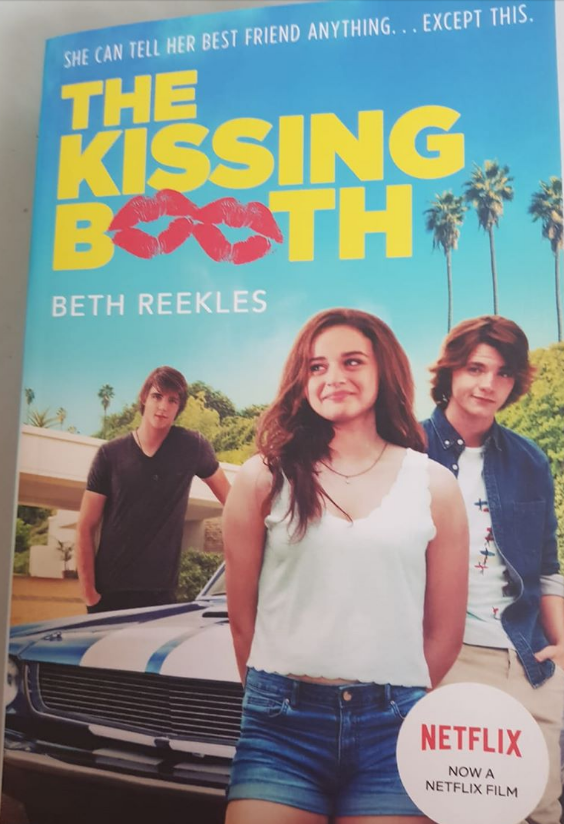
A Review of The Kissing Booth
The Kissing Booth is a book by Beth Reekles. Rochelle "Elle" Evans is best friends with Lee Flynn. They were born on the same day, and their Moms were best friends, too. His older brother, Noah, is the hottest guy in the school. Elle has a huge crush on him, as does most of the school, but he's way out of her league. When she and Lee decide to run a kissing booth at the school carnival, she's surprised when her first kiss is with Noah. They begin a secret relationship, hiding it from everyone, especially Lee.
Elle manages to fall into a huge pitfall of YA protagonists in these sort of books by not having any sort of personality outside of the guys. The movie did her a huge favour by giving her a love of playing football (soccer) and an interest in dancing. However, I liked that she's different for YA protagonists, which often focus on quiet, shy girls. She's no stranger to going to parties and having a bit to drink.
I would really like to see more types of friendship displayed in YA fiction, and this book does do that. It focuses on the friendship between Elle and Lee, almost as much as Elle's relationship with his older brother. From the Netflix movie, I thought they might get them together. I enjoyed the way they could mess around paint-fighting with each other, for example. But the book stays well away from making it into a love triangle, and I think that's a huge benefit. Teens need to see (and read about) boys and girls being good friends, and that girls can have friendships with boys that are as close as friendships with a group of girls. The friendship parts between Elle and Lee were some of my favourite parts of the book.
But for a book like this to be truly enjoyable, you have to be invested in the romance, and I just wasn't. Noah is a controlling jerk, to the point where I was hoping it would end with Elle realising she deserves better. He's been warning guys not to date Elle since even before the story starts, and seems to think he can tell her what to wear. To give you an idea, he reminds me of Christian Grey. This is partly why I'd been hoping that Elle would get together with Lee, instead, someone who she could have a laugh about with.
I am in awe of anyone who gets published as a teenager. Having the determination and discipline at that age to do something I still struggle to do at 26 is huge. This doesn't mean the book is immune from criticism because of her age, however. I wouldn't like to feel like people took it easy on me as a teenager, either. It's a Wattpad story, and it reads like a Wattpad story. Cliches abound, and it could have done with extra editing, too. I saw a few grammar mistakes that should have been caught, and it could do with being quite a lot shorter. Almost 450 pages for this kind of story is way too long. It's also obvious that it was written by a British author but set in America. Terms such as jumpers are used. At one point, Elle gets salted popcorn from a movie theatre, but none of the American movie theatres I've been to do salted popcorn - it's always buttery. And at one point, she says "The night air was cool compared to the heat inside" but in California in spring, that isn't likely. Outside would still be warm, and inside would have all air conditioners on max. Going outside is a nice way to warm up.
So my biggest criticism about this series is that it reads similarly to The Summer I Turned Pretty series. And published after, too, hmm. Moms who are very close best friends from college, one family consisting of two boys. Noah's personality even reminded me a lot of Conrad's.
Oh, and what Starbucks has waiters, anyway?
Netflix has done super things with this material, though, and the movie is worth a watch for sheer escapism on a rainy day. It manages the good balance between condensing the material and adding to it. It's lighthearted fun, and there's nothing wrong with that. To be honest, I recommend the movie over the book. It is sheer entertainment, but there's nothing wrong with things existing for the sole purpose of making people happy.
Elle manages to fall into a huge pitfall of YA protagonists in these sort of books by not having any sort of personality outside of the guys. The movie did her a huge favour by giving her a love of playing football (soccer) and an interest in dancing. However, I liked that she's different for YA protagonists, which often focus on quiet, shy girls. She's no stranger to going to parties and having a bit to drink.
I would really like to see more types of friendship displayed in YA fiction, and this book does do that. It focuses on the friendship between Elle and Lee, almost as much as Elle's relationship with his older brother. From the Netflix movie, I thought they might get them together. I enjoyed the way they could mess around paint-fighting with each other, for example. But the book stays well away from making it into a love triangle, and I think that's a huge benefit. Teens need to see (and read about) boys and girls being good friends, and that girls can have friendships with boys that are as close as friendships with a group of girls. The friendship parts between Elle and Lee were some of my favourite parts of the book.
But for a book like this to be truly enjoyable, you have to be invested in the romance, and I just wasn't. Noah is a controlling jerk, to the point where I was hoping it would end with Elle realising she deserves better. He's been warning guys not to date Elle since even before the story starts, and seems to think he can tell her what to wear. To give you an idea, he reminds me of Christian Grey. This is partly why I'd been hoping that Elle would get together with Lee, instead, someone who she could have a laugh about with.
I am in awe of anyone who gets published as a teenager. Having the determination and discipline at that age to do something I still struggle to do at 26 is huge. This doesn't mean the book is immune from criticism because of her age, however. I wouldn't like to feel like people took it easy on me as a teenager, either. It's a Wattpad story, and it reads like a Wattpad story. Cliches abound, and it could have done with extra editing, too. I saw a few grammar mistakes that should have been caught, and it could do with being quite a lot shorter. Almost 450 pages for this kind of story is way too long. It's also obvious that it was written by a British author but set in America. Terms such as jumpers are used. At one point, Elle gets salted popcorn from a movie theatre, but none of the American movie theatres I've been to do salted popcorn - it's always buttery. And at one point, she says "The night air was cool compared to the heat inside" but in California in spring, that isn't likely. Outside would still be warm, and inside would have all air conditioners on max. Going outside is a nice way to warm up.
So my biggest criticism about this series is that it reads similarly to The Summer I Turned Pretty series. And published after, too, hmm. Moms who are very close best friends from college, one family consisting of two boys. Noah's personality even reminded me a lot of Conrad's.
Oh, and what Starbucks has waiters, anyway?
Netflix has done super things with this material, though, and the movie is worth a watch for sheer escapism on a rainy day. It manages the good balance between condensing the material and adding to it. It's lighthearted fun, and there's nothing wrong with that. To be honest, I recommend the movie over the book. It is sheer entertainment, but there's nothing wrong with things existing for the sole purpose of making people happy.
Tuesday, 2 October 2018
A Review of 13 Minutes
13 Minutes is a book by Sarah Pinborough. Natasha Howland winds up in a freezing cold river in mysterious circumstances. While underwater, she was dead for thirteen minutes, making a recovery described as miraculous. With suspicions falling on her friends Jenny Cole and Hayley Gallagher, it's up to her ex-best friend, Becca Crisp, to get to the truth.
So I actually didn't know this was UKYA when I picked it up! It's always nice when I can understand terminology easier and relate things to my own experience. I think the plotline and the "Mean Girls for an Instagram age" tagline conditioned me to expect a US story. I remember similar experiences with popular girls in my own school, so it isn't just a US phenomenon. The popular girls in the story even have a group name, similar to the Plastics. They're the Barbies.
Even though the story revolves around Natasha, the main character isn't Natasha, it is Becca. This is interesting as Becca's chapters are in third-person, and Natasha's are in first. It actually makes the way that Natasha is the centre of the book, and the only thing the characters are talking about, stand out. Everything is about Natasha. Spoiler: it also makes the books big twist a little harder to swallow. She has no reason to lie in her narration!
Natasha is likely asexual - she says she doesn't like the thought of it and pretends to go further than she actually has. But this line about it did truly annoy me: "It leaves me cold. Maybe I belong in the river."
Becca used to be fat, and there's an awful lot of comments about that, but there's also a very heavy focus given to how much other characters weigh, and the idea of dieting, which is almost unhealthy coming from a YA book.
There is an awful lot of girl-hate. The plot might make this seem obvious, but some writers to subvert some of the standard cliches about this. Becca herself is hateful towards the Barbies and Natasha's internal narration is also mean towards them, too. Becca also complains about the girl who is apparently her best friend, Hannah, who is described as "that boring girl from school who's name no-one would remember in five years time."
Being a UKYA book, it does do that UKYA thing of showing teenagers doing authentic teenage things - they smoke, have sex, drink and try drugs. But I'd also just once to have a book focus on the kind of teenager I was. I didn't drink until I was 17, and even then minimally, I didn't have sex until I was in my twenties.
I'm also not sure if the dialogue is authentically teenage or not. To give an example, at one point Natasha writes in her diary that "How many other people have their death reported in inverted commas?" Would a teenager say 'inverted commas' or would they use the term speech marks? Well, I guess it would depend on the teenager, but an adult writer has a significantly higher chance of knowing the correct term for punctuation.
Spoiler: Saying this book is like Gone Girl is probably going to be a huge giveaway for people familiar with that book. A lying, sociopathic woman, a falsified diary and an unreliable narrator? However, there is a difference between unreliable and intentionally misleading, and I think this book is way too far into it. It makes no sense for Natasha to still be lying in her first-person narration, and even the blurb makes it seem like Natasha doesn't know as much as she does.
I would recommend this for other fans of page-turning thrillers, but please bear in mind some of the problematic content. I hate linking a book to other books, but it does remind me of a British YA Gone Girl.
So I actually didn't know this was UKYA when I picked it up! It's always nice when I can understand terminology easier and relate things to my own experience. I think the plotline and the "Mean Girls for an Instagram age" tagline conditioned me to expect a US story. I remember similar experiences with popular girls in my own school, so it isn't just a US phenomenon. The popular girls in the story even have a group name, similar to the Plastics. They're the Barbies.
Even though the story revolves around Natasha, the main character isn't Natasha, it is Becca. This is interesting as Becca's chapters are in third-person, and Natasha's are in first. It actually makes the way that Natasha is the centre of the book, and the only thing the characters are talking about, stand out. Everything is about Natasha. Spoiler: it also makes the books big twist a little harder to swallow. She has no reason to lie in her narration!
Natasha is likely asexual - she says she doesn't like the thought of it and pretends to go further than she actually has. But this line about it did truly annoy me: "It leaves me cold. Maybe I belong in the river."
Becca used to be fat, and there's an awful lot of comments about that, but there's also a very heavy focus given to how much other characters weigh, and the idea of dieting, which is almost unhealthy coming from a YA book.
There is an awful lot of girl-hate. The plot might make this seem obvious, but some writers to subvert some of the standard cliches about this. Becca herself is hateful towards the Barbies and Natasha's internal narration is also mean towards them, too. Becca also complains about the girl who is apparently her best friend, Hannah, who is described as "that boring girl from school who's name no-one would remember in five years time."
Being a UKYA book, it does do that UKYA thing of showing teenagers doing authentic teenage things - they smoke, have sex, drink and try drugs. But I'd also just once to have a book focus on the kind of teenager I was. I didn't drink until I was 17, and even then minimally, I didn't have sex until I was in my twenties.
I'm also not sure if the dialogue is authentically teenage or not. To give an example, at one point Natasha writes in her diary that "How many other people have their death reported in inverted commas?" Would a teenager say 'inverted commas' or would they use the term speech marks? Well, I guess it would depend on the teenager, but an adult writer has a significantly higher chance of knowing the correct term for punctuation.
Spoiler: Saying this book is like Gone Girl is probably going to be a huge giveaway for people familiar with that book. A lying, sociopathic woman, a falsified diary and an unreliable narrator? However, there is a difference between unreliable and intentionally misleading, and I think this book is way too far into it. It makes no sense for Natasha to still be lying in her first-person narration, and even the blurb makes it seem like Natasha doesn't know as much as she does.
I would recommend this for other fans of page-turning thrillers, but please bear in mind some of the problematic content. I hate linking a book to other books, but it does remind me of a British YA Gone Girl.
Tuesday, 18 September 2018
A Review of The Exact Opposite of Okay
The Exact Opposite of Okay is a book by Laura Steven. Izzy O'Neill has been raised by her grandmother Betty since losing both her parents in a car crash. They get by with Betty's income from her job in a diner. Izzy wants to write humourous scripts for TV, but she feels her dream may not come true because of their lack of money. However, when an account of two sexual encounters she had at a party goes viral, Izzy finds herself the centre of much unwanted attention.
Basically every character who wasn't awful was a delight. Betty is the Grandmother I'd always wanted. Supportive teachers also amaze me. I loved that Izzy was given the $50 with no expectation to succeed or pay it back, just because it would be a great experience for her to try, even if she didn't win. And her romance was adorable in how well it fitted her. It's not cute in the general sense, but they do get on well. It was shallow, but then again, it's not the main focus of the book. If it was necessary to have a romance is another topic, but here I think it works. He also does show that not every male in this book is awful, so I would say that the romance was a necessary inclusion. There are also characters with shades of grey, such as Zack. It must be awful having most conversations you have bring up your father in some way, and I would have actually liked to see more of him as a reasonable human being. Ajita is basically the best best friend you could want in Izzy's circumstances, too.
Spoiler: I didn't want to spend any review time talking about Daniel, but I guess I would have to bring him up somewhere. Boy, does he remind me of some guys I've dealt with. What. An. Arsehole. [/spoiler]
What Izzy goes through is not dissimilar to similar events that have happened to real people. I'm thinking predominantly of leaking of celebrity nudes and revenge porn, but some people may know other examples. I was going to say "her life shouldn't be ruined because of a mistake" but it wasn't even a mistake, because it literally shouldn't have happened to her in the first place. Even her sending nudes was well within the bounds of acceptability. Izzy's eighteen*, making this an adult deciding to do something just for the hell of it. If you think it was wrong, I suggest rereading this book, and ask yourself why.
Izzy does make a serious mistake at one point, when she tells that Ajita is gay. This wasn't Izzy's thing to tell people - Ajita gets to decide who knows and when and how to tell them. However, much of the audience of this book will likely be teenagers. Some of them may not be aware of the consequences of giving away someone's sexuality and why you shouldn't do it. I'm not saying that makes Izzy's actions in the book okay, but it does mean people may learn something. Izzy is only a teenager, herself, and therefore will make mistakes. It's only natural. And no, being a full adult in the eyes of the law and still being a teenager prone to errors in judgement can coexist. Even at eighteen, you won't know everything, and you can still develop as a person as an adult.
I will say that some of the syntax reads more British than American. It can be jarring for those who are not used to it. Expect it before going in, remember that it is written by a British writer, and bear in mind that there are a lot of books set in Britain where Americanisms have crept in, too. Those sort of books can throw me right out of the story when I read them. If I'm honest, it still threw me off in this one, too, but I'll give it a pass.
Edit: Since I didn't state this anywhere, the reason British terms sound weird in this book is because it is set in America, but written by a UK author.
* If you are under eighteen, however, please don't send nudes, ever, because distribution and possession of them comes under child pornography laws. Make sure whatever you do is safe and legal. I am disappointed that this point was never brought up, because this book could have been a good way to educate the target audience on best practice for sending nudes. In addition to "don't do it if you're underage" there's also "don't show any identifying features" and "only share them with people you trust." As well as if they ever do get leaked, it is absolutely, 100% not your fault.
I would recommend this book to anyone growing up and trying to make sense of how women are treated in society.
Basically every character who wasn't awful was a delight. Betty is the Grandmother I'd always wanted. Supportive teachers also amaze me. I loved that Izzy was given the $50 with no expectation to succeed or pay it back, just because it would be a great experience for her to try, even if she didn't win. And her romance was adorable in how well it fitted her. It's not cute in the general sense, but they do get on well. It was shallow, but then again, it's not the main focus of the book. If it was necessary to have a romance is another topic, but here I think it works. He also does show that not every male in this book is awful, so I would say that the romance was a necessary inclusion. There are also characters with shades of grey, such as Zack. It must be awful having most conversations you have bring up your father in some way, and I would have actually liked to see more of him as a reasonable human being. Ajita is basically the best best friend you could want in Izzy's circumstances, too.
Spoiler: I didn't want to spend any review time talking about Daniel, but I guess I would have to bring him up somewhere. Boy, does he remind me of some guys I've dealt with. What. An. Arsehole. [/spoiler]
What Izzy goes through is not dissimilar to similar events that have happened to real people. I'm thinking predominantly of leaking of celebrity nudes and revenge porn, but some people may know other examples. I was going to say "her life shouldn't be ruined because of a mistake" but it wasn't even a mistake, because it literally shouldn't have happened to her in the first place. Even her sending nudes was well within the bounds of acceptability. Izzy's eighteen*, making this an adult deciding to do something just for the hell of it. If you think it was wrong, I suggest rereading this book, and ask yourself why.
Izzy does make a serious mistake at one point, when she tells that Ajita is gay. This wasn't Izzy's thing to tell people - Ajita gets to decide who knows and when and how to tell them. However, much of the audience of this book will likely be teenagers. Some of them may not be aware of the consequences of giving away someone's sexuality and why you shouldn't do it. I'm not saying that makes Izzy's actions in the book okay, but it does mean people may learn something. Izzy is only a teenager, herself, and therefore will make mistakes. It's only natural. And no, being a full adult in the eyes of the law and still being a teenager prone to errors in judgement can coexist. Even at eighteen, you won't know everything, and you can still develop as a person as an adult.
I will say that some of the syntax reads more British than American. It can be jarring for those who are not used to it. Expect it before going in, remember that it is written by a British writer, and bear in mind that there are a lot of books set in Britain where Americanisms have crept in, too. Those sort of books can throw me right out of the story when I read them. If I'm honest, it still threw me off in this one, too, but I'll give it a pass.
Edit: Since I didn't state this anywhere, the reason British terms sound weird in this book is because it is set in America, but written by a UK author.
* If you are under eighteen, however, please don't send nudes, ever, because distribution and possession of them comes under child pornography laws. Make sure whatever you do is safe and legal. I am disappointed that this point was never brought up, because this book could have been a good way to educate the target audience on best practice for sending nudes. In addition to "don't do it if you're underage" there's also "don't show any identifying features" and "only share them with people you trust." As well as if they ever do get leaked, it is absolutely, 100% not your fault.
I would recommend this book to anyone growing up and trying to make sense of how women are treated in society.
Tuesday, 21 August 2018
A Review of Leah on the Offbeat
Leah on the Offbeat is a book by Becky Albertalli, and is a companion novel of sorts to Simon vs. the Homo Sapiens Agenda. Leah Burke and her friends are entering senior year. With college applications and prom fast approaching, she's worried about her friendship group, which appears to be fracturing. However, she starts to realise she has more feeling for one in her group than she wanted to have.
Under a cut because I doubt I can talk about this book without spoiling it. It's hard to even write a summary without spoiling.
Tuesday, 14 August 2018
A Review of Theatrical
Theatrical is a book by Maggie Harcourt. Hope Parker has loved the world of theatre ever since getting glimpses of her mother's glamorous career as a costume designer. Getting a student placement at the Earl's Theatre is a dream come true, for the girl who wants to work in stage management. The opening night of a huge production is coming up, but there's also a budding romance with a student actor for her to worry about. But, as always, the show must go on.
At the end of the book, I was just confused, because I couldn't quite work out what hadn't worked. On paper, it should have been good for me. I love theatre, and I love reading about passionate characters. But something in this one was just slightly off. I always do like to start with the good, and I have a few positive things to say about it. The theatre stuff was good!
I did a bit of amateur dramatics acting as a teen, and the descriptions of the excitement and tension of backstage were spot on! I felt like I was there with Hope, costuming, counting props and cuing lights. I also really did connect with her love of theatre, and they're right up there with some of the most magical places in the world, to me.
Theatrical does capture a feeling I've felt quite a lot in my adult life. When you're new at a job, and everyone else seems to know what they're doing, and you're expected to know even though it's your first day, and people just roll their eyes when you ask where something is. When you know that if you ask for help with something, you'll be treated like you're stupid, but if you go ahead and do it, you'll make a mistake. When you feel like you just can't do anything right.
We are told that Hope is experienced and is determined to prove herself, but she comes across as mostly irresponsible and unprofessional. She's late quite often and misses cues because she's too busy daydreaming about her love interest. A few mistakes would be understandable - she's a teenager, and she's still learning. But things like being late aren't something I expect from someone who is trying to prove she can make it without her mother's help.
The romance was bland as vanilla. I'm sorry, but it was. I would have preferred her with George, because we do need more Asian love interests in YA and her family background provided an interesting parallel with his passion. I also liked seeing a boy with more feminine interests who wasn't gay. I know we need more LGBT characters, but I also feel like we need more straight characters (especially men) with interests associated with other genders.
Also, why was a girl who wants to work in theatre doing chemistry and maths as an A-Level? Maths I can possibly see, since it may come in handy for calculating things, but there is no earthly reason to do chemistry if it doesn't directly relate to what you want to do at University. It is that hard, and I know from experience, since I did it. Even if we take out Drama (Hope's not into the acting side so much) and Textiles (too much like her mother's line of work) surely English, Art and Graphic Design would have made more sense? Or a foreign language or a humanities subject? The A-levels a character takes should be somewhat linked to their personality. For the confused, most places only let you take a maximum of five, and most people will only do three or four. Also, taking any time out of school during your A-levels so close to exams seems to be not only foolish but also something most schools wouldn't let you do.
I would recommend this one for theatre lovers, especially those who have does any sort of community theatre work.
At the end of the book, I was just confused, because I couldn't quite work out what hadn't worked. On paper, it should have been good for me. I love theatre, and I love reading about passionate characters. But something in this one was just slightly off. I always do like to start with the good, and I have a few positive things to say about it. The theatre stuff was good!
I did a bit of amateur dramatics acting as a teen, and the descriptions of the excitement and tension of backstage were spot on! I felt like I was there with Hope, costuming, counting props and cuing lights. I also really did connect with her love of theatre, and they're right up there with some of the most magical places in the world, to me.
Theatrical does capture a feeling I've felt quite a lot in my adult life. When you're new at a job, and everyone else seems to know what they're doing, and you're expected to know even though it's your first day, and people just roll their eyes when you ask where something is. When you know that if you ask for help with something, you'll be treated like you're stupid, but if you go ahead and do it, you'll make a mistake. When you feel like you just can't do anything right.
We are told that Hope is experienced and is determined to prove herself, but she comes across as mostly irresponsible and unprofessional. She's late quite often and misses cues because she's too busy daydreaming about her love interest. A few mistakes would be understandable - she's a teenager, and she's still learning. But things like being late aren't something I expect from someone who is trying to prove she can make it without her mother's help.
The romance was bland as vanilla. I'm sorry, but it was. I would have preferred her with George, because we do need more Asian love interests in YA and her family background provided an interesting parallel with his passion. I also liked seeing a boy with more feminine interests who wasn't gay. I know we need more LGBT characters, but I also feel like we need more straight characters (especially men) with interests associated with other genders.
Also, why was a girl who wants to work in theatre doing chemistry and maths as an A-Level? Maths I can possibly see, since it may come in handy for calculating things, but there is no earthly reason to do chemistry if it doesn't directly relate to what you want to do at University. It is that hard, and I know from experience, since I did it. Even if we take out Drama (Hope's not into the acting side so much) and Textiles (too much like her mother's line of work) surely English, Art and Graphic Design would have made more sense? Or a foreign language or a humanities subject? The A-levels a character takes should be somewhat linked to their personality. For the confused, most places only let you take a maximum of five, and most people will only do three or four. Also, taking any time out of school during your A-levels so close to exams seems to be not only foolish but also something most schools wouldn't let you do.
I would recommend this one for theatre lovers, especially those who have does any sort of community theatre work.
Tuesday, 7 August 2018
A Review of Puddin'
Puddin' is a novel by Julie Murphy, and is a sort of companion book/second novel to Dumplin'. Millie Michelchuk is sick of being held back because of her weight. This year, instead of going to fat camp, she's going to apply for broadcast journalism school. Cassie Reyes, on the school dance team, is upset when their sponsorship by a local small gym is dropped. After vandalising the gym, she winds up working their to pay back her damages, spending more time about Millie during her time there.
I loved it! I've been hit-or-miss with Julie Murphy so far. I loved Dumplin', wasn't overjoyed by Side Effects May Vary and am still not sure what to think about Ramona Blue. The only thing I was disappointed about is that there wasn't a romance between the two girls.
But I think their two personalities were what made the book. They're both very different people. Girls can be bitchy, they can be nice, they can be complex. I'll say it - I feel that the YA genre has been a goldmine of women as well-rounded characters with interesting personalities lately. Two very different girls can become friends. Add to this the supporting cast, again mostly female, and you've got a novel that's very character driven, so it's a good thing that it's a very strong cast of them.
I loved Millie! She's a sweetheart. You know how I often say that my favourite YA protagonists are those with some sort of dream or goal? She wants to be a news anchor, and my word is she working to make that happen. There's no reason why you should have to wait until you are an adult to start studying what you are interested in. The fact she's got an extra barrier with her size is not going to stop her.
Cassie may take someone longer to warm to. I had a sense of where the character was going, so I was waiting to see with her. She's a masterclass in how to write a mean girl without it turning into girl-hate. Her POV means we get her reasons, and her character development shows through in the end.
I admit I wasn't sold on the idea of a sleepover between the girls from Dumplin' at first, because I found it wasn't the strongest chapter, but the second one where Millie brings Cassie is rife with drama. These girls are very different, and adding one more member upset their fragile balance. Amanda has a discussion on asexuality with the others, which I loved, plus she's also disabled. I would like a third book in this series centring on her, actually. Hannah comes across as only being there because she has to be, but deep down I think she really does care. Willowdean and El are each others best friends, so if their group fell apart, they'd be okay if they had each other. Millie is the one who cares the most about their group.
Another thing I really like about this book is the Texas setting! I've been out to Texas several times to visit friends, and I love (most things about) the state! Especially the food, and the description of a Texas BBQ place made my mouth water.
Recommended for those who like their cute contemporaries with complex characters.
I loved it! I've been hit-or-miss with Julie Murphy so far. I loved Dumplin', wasn't overjoyed by Side Effects May Vary and am still not sure what to think about Ramona Blue. The only thing I was disappointed about is that there wasn't a romance between the two girls.
But I think their two personalities were what made the book. They're both very different people. Girls can be bitchy, they can be nice, they can be complex. I'll say it - I feel that the YA genre has been a goldmine of women as well-rounded characters with interesting personalities lately. Two very different girls can become friends. Add to this the supporting cast, again mostly female, and you've got a novel that's very character driven, so it's a good thing that it's a very strong cast of them.
I loved Millie! She's a sweetheart. You know how I often say that my favourite YA protagonists are those with some sort of dream or goal? She wants to be a news anchor, and my word is she working to make that happen. There's no reason why you should have to wait until you are an adult to start studying what you are interested in. The fact she's got an extra barrier with her size is not going to stop her.
Cassie may take someone longer to warm to. I had a sense of where the character was going, so I was waiting to see with her. She's a masterclass in how to write a mean girl without it turning into girl-hate. Her POV means we get her reasons, and her character development shows through in the end.
I admit I wasn't sold on the idea of a sleepover between the girls from Dumplin' at first, because I found it wasn't the strongest chapter, but the second one where Millie brings Cassie is rife with drama. These girls are very different, and adding one more member upset their fragile balance. Amanda has a discussion on asexuality with the others, which I loved, plus she's also disabled. I would like a third book in this series centring on her, actually. Hannah comes across as only being there because she has to be, but deep down I think she really does care. Willowdean and El are each others best friends, so if their group fell apart, they'd be okay if they had each other. Millie is the one who cares the most about their group.
Another thing I really like about this book is the Texas setting! I've been out to Texas several times to visit friends, and I love (most things about) the state! Especially the food, and the description of a Texas BBQ place made my mouth water.
Recommended for those who like their cute contemporaries with complex characters.
Tuesday, 24 July 2018
A Review of The Sky is Everywhere
The Sky is Everywhere is a book by Jandy Nelson, who also wrote I'll Give You The Sun. Lennie Walker is a seventeen year old clarinettist and classic literature reader who always felt in the shadow of her older sister, Bailey. With her sister's recent sudden death, Lennie is trying to sort her life back together. With the arrival of new kid Joe Fontaine, Lennie starts crushing but feels guilty for enjoying something so soon after her sister's death. But she is also starting to connect to Bailey's boyfriend, Toby Shaw, in a way she didn't expect.
It is rare that I finish a book and I don't know what to think. I felt the same way about I'll Give You The Sun, too. Later, I started to feel like it wasn't that I didn't know what to thing, just a distinct feeling of meh. I know they are well-liked books, but I couldn't get into them.
Lennie is a realistic teenager, perhaps more messed up than most of them with her sister's death, but she's not a pleasant one. I think that when you kiss your dead sister's boyfriend in front of the guy you were sort-of dating, you kind of forfeit your rights to feel jealous that he's with another girl? You aren't entitled to another chance in that case. I also didn't get her obsession with a Wuthering Heights style romance, because I thought the point of that book was that their relationship was unhealthy.
Plus points for her ambitions with clarinet, an unusual instrument to see in YA, and for seeing her develop her goals around it. Plus I did enjoy her poetry, even if the way she distributes it borders on littering and vandalism at times. They're more collections of thoughts and conversations, some one word a line style poems. But that's okay because poetry, like anything else, can adapt and change to the modern world. We don't have to write the same kind of poetry as those who came before, but we still can if we want to.
The grief was nicely done, as well. There's no one way to grieve. There's no set time limit on how soon you can go back to feeling happy, and there's no point where you have to stop feeling sad about it, either. Lennie doesn't quite get this, at her age and going through it once. Grief makes Lennie selfish - when she was going on about how Toby was the only one to understand, I wanted to point out to her that she still had her Gram. Others will react to it differently. Some of the quotes were exact descriptions of how I was feeling back in August/September.
Then there's Sarah, who as far as I can tell, is a feminist to get guys? She wasn't well explained, despite being Lennie's best friend. Lennie shuts her out from grief, and Sarah doesn't try to connect? I understand that sometimes you need to give them time, but most would understand that friendships if they are strong enough can always be picked up where they left off. Sarah didn't reach out to ask Lennie if she was okay, but seemed more interested in getting back a friend on her terms. She's mad at Lennie at one point because Lennie went quiet for a while, this being shortly after Lennie's older sister died. So what I'm saying is that I'm not buying that Sarah was giving Lennie space or trying to help her process things. Lennie's Gram was my favourite character, but I found it odd that everyone else calls her Gram, too. I really wish I could write more about Bailey here, but we only really see her through Lennie's eyes, as the idealised older sister.
The two boys annoyed me. A skater boy and a music genius. If that's not cliche enough, let's have him be from France, too. Toby is literally her dead sister's boyfriend, and Joe was a little lacking in personality. I honestly think the book would have been stronger without the love triangle, allowing more time for Joe to develop. Plus both seem to come round the house at all hours, coincidentally often running into each other.
One other character I'd like to discuss is Rachel. She's given quite a bit of girl-hate from Lennie, because... she got first chair clarinet after Lennie flunked the audition, she's pretty, made a few unkind comments and starts dating Joe after Lennie kissed Toby in front of him. She's not the nicest character, but not quite bad enough to make me empathise with Lennie's internal thoughts about her,
The teenspeak is cringe-worthy, too. Lennie uses the term WTF-asaurus (seriously, WTF?) and I would have stabbed my eyeballs out if I'd read the word Joelirious one more time.
One more minor quibble: only children don't tend to hate being only children. It's just a general fact of their existence. You don't miss what you never had. In the same way as people with siblings can't imagine life without them, it's hard for us to imagine how our life would be different without them. Sure, some of us might have wished for a sibling when we were younger, but I bet most of us grew out of that phase. We're not lesser people, nor do we automatically hate our existence, because we don't have siblings.
I might recommend this book to people who would like to learn more about grief.
It is rare that I finish a book and I don't know what to think. I felt the same way about I'll Give You The Sun, too. Later, I started to feel like it wasn't that I didn't know what to thing, just a distinct feeling of meh. I know they are well-liked books, but I couldn't get into them.
Lennie is a realistic teenager, perhaps more messed up than most of them with her sister's death, but she's not a pleasant one. I think that when you kiss your dead sister's boyfriend in front of the guy you were sort-of dating, you kind of forfeit your rights to feel jealous that he's with another girl? You aren't entitled to another chance in that case. I also didn't get her obsession with a Wuthering Heights style romance, because I thought the point of that book was that their relationship was unhealthy.
Plus points for her ambitions with clarinet, an unusual instrument to see in YA, and for seeing her develop her goals around it. Plus I did enjoy her poetry, even if the way she distributes it borders on littering and vandalism at times. They're more collections of thoughts and conversations, some one word a line style poems. But that's okay because poetry, like anything else, can adapt and change to the modern world. We don't have to write the same kind of poetry as those who came before, but we still can if we want to.
The grief was nicely done, as well. There's no one way to grieve. There's no set time limit on how soon you can go back to feeling happy, and there's no point where you have to stop feeling sad about it, either. Lennie doesn't quite get this, at her age and going through it once. Grief makes Lennie selfish - when she was going on about how Toby was the only one to understand, I wanted to point out to her that she still had her Gram. Others will react to it differently. Some of the quotes were exact descriptions of how I was feeling back in August/September.
Then there's Sarah, who as far as I can tell, is a feminist to get guys? She wasn't well explained, despite being Lennie's best friend. Lennie shuts her out from grief, and Sarah doesn't try to connect? I understand that sometimes you need to give them time, but most would understand that friendships if they are strong enough can always be picked up where they left off. Sarah didn't reach out to ask Lennie if she was okay, but seemed more interested in getting back a friend on her terms. She's mad at Lennie at one point because Lennie went quiet for a while, this being shortly after Lennie's older sister died. So what I'm saying is that I'm not buying that Sarah was giving Lennie space or trying to help her process things. Lennie's Gram was my favourite character, but I found it odd that everyone else calls her Gram, too. I really wish I could write more about Bailey here, but we only really see her through Lennie's eyes, as the idealised older sister.
The two boys annoyed me. A skater boy and a music genius. If that's not cliche enough, let's have him be from France, too. Toby is literally her dead sister's boyfriend, and Joe was a little lacking in personality. I honestly think the book would have been stronger without the love triangle, allowing more time for Joe to develop. Plus both seem to come round the house at all hours, coincidentally often running into each other.
One other character I'd like to discuss is Rachel. She's given quite a bit of girl-hate from Lennie, because... she got first chair clarinet after Lennie flunked the audition, she's pretty, made a few unkind comments and starts dating Joe after Lennie kissed Toby in front of him. She's not the nicest character, but not quite bad enough to make me empathise with Lennie's internal thoughts about her,
The teenspeak is cringe-worthy, too. Lennie uses the term WTF-asaurus (seriously, WTF?) and I would have stabbed my eyeballs out if I'd read the word Joelirious one more time.
One more minor quibble: only children don't tend to hate being only children. It's just a general fact of their existence. You don't miss what you never had. In the same way as people with siblings can't imagine life without them, it's hard for us to imagine how our life would be different without them. Sure, some of us might have wished for a sibling when we were younger, but I bet most of us grew out of that phase. We're not lesser people, nor do we automatically hate our existence, because we don't have siblings.
I might recommend this book to people who would like to learn more about grief.
Tuesday, 10 July 2018
A Review of Open Road Summer
Open Road Summer was Emery Lord's first novel. Reagan O'Neill, recovering bad girl, is joining her friend Delilah Montgomery on tour. The world knows her as Lilah Montgomery, country music star, but to everyone who knows her, she's Dee. This tour could be the thing to fix both girls broken hearts. When Matt Finch is brought in to open her show and pose as Dee's fictional boyfriend, it's Reagan who ends up getting closer to him.
Lord is one of my favourite authors, but the thing I find interesting is that her growth as a writer is obvious over her books, with her most recent books being better to me than her first two.
Lord does three things incredibly well - friendship, passions and grief, and all three are at play here. I really felt Dee's passion for her music and her career and Reagan's passion for photography. This was an interesting mix, as it was photographers that caused much of Dee's problems over the book. It's also fascinating to read about a seventeen-year-old juggling a career and everything else in her life. Reagan and Dee have one of those friendships where even when they fight, they won't hold it against each other, and they'll both be instantly with each other in a crisis. And for grief, Matt's mother died recently, and she again hits the nail over the head with her descriptions. This sentence got me, as it was what I'd been feeling that exact week: "I think the worst part is reconciling all the things she'll miss."
So I'll just state this here - Reagan is not a nice person. She's not what I'd consider a role model, and I don't mean that because of her clothing choices, which have nothing to do with anything. She knows she's attractive, and dresses to show it off. But she smokes, which I really don't like. I understand it's a thing teens do and should get some recognition in YA, I wish it didn't have to. She's incredibly judgemental and she will act rashly or selfishly at times. She is full of girl-hate towards other girls, too. I did think it was hypocritical of her, but then I realised she might be judging them on traits she perceives in herself. I think that self-respect is a very messed-up term to start with, but Reagan was not in a good place when she started going out with Blake. And how people act on the one night a year where they get to let their hair down and have a bit of fun seeing a celebrity in the flesh is not normally how they are everyday. Funnily enough, it seems to be the fans of Matt who she is worse too...
I also felt like the ending dragged on a bit long. There was only so much of Matt apologising I could take before I wanted Reagan to just take him back, already. However, I do understand why Reagan would have been apprehensive, as she is used to people leaving and proving themselves untrustworthy.
Lord is also good at making people rethink their original views of a character. Reagan does eventually realise that she might be being too harsh on Brenda. I was disappointed that Corinne didn't quite get the same treatment, but I did enjoy the twist with her.
I'll recommend this to people who are already Emery Lord fans and therefore familiar with her style, and those looking for a summer contemporary with a bit of heart.
Lord is one of my favourite authors, but the thing I find interesting is that her growth as a writer is obvious over her books, with her most recent books being better to me than her first two.
Lord does three things incredibly well - friendship, passions and grief, and all three are at play here. I really felt Dee's passion for her music and her career and Reagan's passion for photography. This was an interesting mix, as it was photographers that caused much of Dee's problems over the book. It's also fascinating to read about a seventeen-year-old juggling a career and everything else in her life. Reagan and Dee have one of those friendships where even when they fight, they won't hold it against each other, and they'll both be instantly with each other in a crisis. And for grief, Matt's mother died recently, and she again hits the nail over the head with her descriptions. This sentence got me, as it was what I'd been feeling that exact week: "I think the worst part is reconciling all the things she'll miss."
So I'll just state this here - Reagan is not a nice person. She's not what I'd consider a role model, and I don't mean that because of her clothing choices, which have nothing to do with anything. She knows she's attractive, and dresses to show it off. But she smokes, which I really don't like. I understand it's a thing teens do and should get some recognition in YA, I wish it didn't have to. She's incredibly judgemental and she will act rashly or selfishly at times. She is full of girl-hate towards other girls, too. I did think it was hypocritical of her, but then I realised she might be judging them on traits she perceives in herself. I think that self-respect is a very messed-up term to start with, but Reagan was not in a good place when she started going out with Blake. And how people act on the one night a year where they get to let their hair down and have a bit of fun seeing a celebrity in the flesh is not normally how they are everyday. Funnily enough, it seems to be the fans of Matt who she is worse too...
I also felt like the ending dragged on a bit long. There was only so much of Matt apologising I could take before I wanted Reagan to just take him back, already. However, I do understand why Reagan would have been apprehensive, as she is used to people leaving and proving themselves untrustworthy.
Lord is also good at making people rethink their original views of a character. Reagan does eventually realise that she might be being too harsh on Brenda. I was disappointed that Corinne didn't quite get the same treatment, but I did enjoy the twist with her.
I'll recommend this to people who are already Emery Lord fans and therefore familiar with her style, and those looking for a summer contemporary with a bit of heart.
Tuesday, 3 July 2018
A Review of Me and Earl and the Dying Girl
Me and Earl and the Dying Girl is a book by Jesse Andrews, which has been made into a movie. Greg Gaines lives his life as a high school chameleon, just trying to get through. He can hang out casually in any clique, but has no-one he would consider a friend. He does have Earl Jackson, but they mostly hang out to make movies and Greg considers them co-workers. This does change when Rachel Kushner, Greg's once sort-of girlfriend from middle school, is diagnosed with Leukaemia. Greg's Mom convinces him to hang out with her to cheer her up, and Greg find herself more involved in her life than he, quite frankly, ever wanted to be.
Maybe, possibly, just not quite my sort of book? Some of the jokes and humour fell flat to me, but I'd be lying if I said some didn't have me laughing, too. I was all set to make the John Green The Fault in our Stars comparison, but I think in overall tone, it's more like Paper Towns. Which is especially odd as Paper Towns is my favourite John Green book. In fact, it's possible that it the the anti-"Cancer Book" cancer book many people were searching for in The Fault in our Stars.
The best thing I can say about this book is that it is honest. Cancer does suck. People don't always respond to tragedy well, especially when it only tangentially effects them. Greg is very much a teenage boy, with what I think considering I have never been a teenage boy, a very typical teenage boy mindset. He's awkward as anything, too. However, I did love how obviously passionate he was about films and film-making. Sure, he doesn't think he's any good, but he's a kid messing about with his Dad's camera. He still manages to put something together with improvised props and sets, and not every teenager would be able to do that. I think with a little more guidance and some practice, he'd get good.
Also - you didn't learn anything from Rachel's death? Not to be nicer to people in general in case they have cancer, or that people with cancer are essentially people and should be treated as such or that people who "have nothing interesting to say" can often be interesting once you get to know them? I mean, sure, there's not always some deep revelation to be had about how fleeting life is and you should live it to the fullest, but I'm sure there is some takeaway to be had. I mean, I know that not everyone learns big life lessons after an event like this, but these aren't big life lessons, they're just... little things that can change an outlook.
There were some lines that made me side eye Greg's, and by extension Andrews', attitude towards women. "Most girls are annoying" "The girls proceeded to cover the box in glitter, talking about domesticity or pixies." I understand that views expressed by characters in a book are often not representative of the views of the author, but this book is also going to be read by many teenagers who are still shaping their worldview, and one of the ways they do that is through media. Earl also displays some problematic views, such as one entire conversation where he is incredibly biphobic. Really, I think this is more representative of the fact that teenagers can and do think like that, but that section may be an uncomfortable read for people who are bi. Teenagers are still developing and we can still change our views throughout adulthood. I think the reason this bothers me more is that Greg's problematic behaviour is called out somewhat, but Earl's is left unchallenged.
I have watched the movie before, and I have to say that I love it. The movie hit the exact right notes to be a comedy, and toned down the bad side of Greg's personality somewhat. The difference I often find is that movies cannot give us such a direct look into a characters head as a book can, so we never see their more unsavoury thoughts. Sometimes I feel this is at the expense of giving characters some depth, but here I feel it was the right decision.
So I do recommend this to people who are still looking for that cancer book which is not a Cancer Book.
Maybe, possibly, just not quite my sort of book? Some of the jokes and humour fell flat to me, but I'd be lying if I said some didn't have me laughing, too. I was all set to make the John Green The Fault in our Stars comparison, but I think in overall tone, it's more like Paper Towns. Which is especially odd as Paper Towns is my favourite John Green book. In fact, it's possible that it the the anti-"Cancer Book" cancer book many people were searching for in The Fault in our Stars.
The best thing I can say about this book is that it is honest. Cancer does suck. People don't always respond to tragedy well, especially when it only tangentially effects them. Greg is very much a teenage boy, with what I think considering I have never been a teenage boy, a very typical teenage boy mindset. He's awkward as anything, too. However, I did love how obviously passionate he was about films and film-making. Sure, he doesn't think he's any good, but he's a kid messing about with his Dad's camera. He still manages to put something together with improvised props and sets, and not every teenager would be able to do that. I think with a little more guidance and some practice, he'd get good.
Also - you didn't learn anything from Rachel's death? Not to be nicer to people in general in case they have cancer, or that people with cancer are essentially people and should be treated as such or that people who "have nothing interesting to say" can often be interesting once you get to know them? I mean, sure, there's not always some deep revelation to be had about how fleeting life is and you should live it to the fullest, but I'm sure there is some takeaway to be had. I mean, I know that not everyone learns big life lessons after an event like this, but these aren't big life lessons, they're just... little things that can change an outlook.
There were some lines that made me side eye Greg's, and by extension Andrews', attitude towards women. "Most girls are annoying" "The girls proceeded to cover the box in glitter, talking about domesticity or pixies." I understand that views expressed by characters in a book are often not representative of the views of the author, but this book is also going to be read by many teenagers who are still shaping their worldview, and one of the ways they do that is through media. Earl also displays some problematic views, such as one entire conversation where he is incredibly biphobic. Really, I think this is more representative of the fact that teenagers can and do think like that, but that section may be an uncomfortable read for people who are bi. Teenagers are still developing and we can still change our views throughout adulthood. I think the reason this bothers me more is that Greg's problematic behaviour is called out somewhat, but Earl's is left unchallenged.
I have watched the movie before, and I have to say that I love it. The movie hit the exact right notes to be a comedy, and toned down the bad side of Greg's personality somewhat. The difference I often find is that movies cannot give us such a direct look into a characters head as a book can, so we never see their more unsavoury thoughts. Sometimes I feel this is at the expense of giving characters some depth, but here I feel it was the right decision.
So I do recommend this to people who are still looking for that cancer book which is not a Cancer Book.
Subscribe to:
Posts (Atom)